In summary:
- Mastering one-pedal driving means treating the accelerator like an analogue dial, not an on/off switch.
- The key to smoothness is learning to “feather” the pedal release to control the rate of deceleration.
- While great for efficiency and reducing fatigue, the physical brake pedal remains essential for emergencies.
- Practice in a safe, open area for 15-20 minutes daily to build new muscle memory within three days.
That first drive in a new electric vehicle with one-pedal mode engaged can be… abrupt. You lift your foot, expecting to coast, and the car brakes so aggressively you feel a lurch in your stomach. You’re not a bad driver; you’re simply using a tool designed for nuance with a technique built for a different system. Many new EV owners find this initial experience jarring and question if this feature is even worth the hassle. The common advice is simply that “it takes getting used to,” but that’s not a strategy—it’s a vague hope.
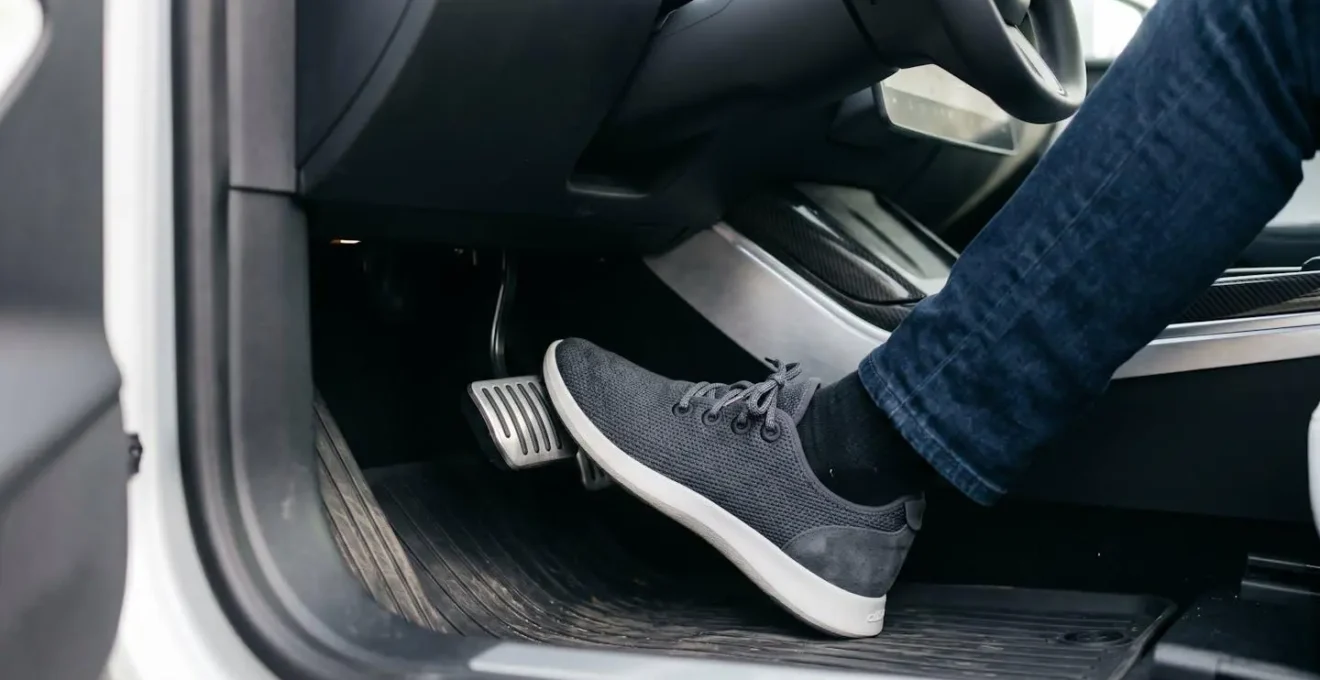
The truth is, your foot has spent years, even decades, operating on a binary system: one pedal to go, another to stop. One-pedal driving collapses this into a single input, but it’s not a simple switch. The real challenge, and the secret to mastering it, lies in rewiring that muscle memory. It’s about transforming your “digital” foot into an “analogue foot” capable of subtle, precise adjustments.
This guide moves beyond generic tips. We’re going to treat this like a coaching session, breaking down the mechanics and the feel of one-pedal driving. We won’t just tell you what to do; we’ll explain why the car responds the way it does. You will learn how to anticipate, modulate, and control deceleration with the same confidence you have in a traditional car. The goal isn’t just to stop the jerky braking; it’s to unlock a smoother, more efficient, and surprisingly more relaxing way to drive.
This article breaks down everything you need to know, from the science of why it reduces stress to the practical differences between systems like Tesla’s and Nissan’s. Explore the sections below to become a one-pedal driving expert.
Summary: The Complete Guide to Mastering Smooth One-Pedal EV Driving
- Why One-Pedal Mode Reduces Driver Fatigue by 50% on the M25?
- The Emergency Stop Myth: Do You Still Need the Brake Pedal in a Crisis?
- Tesla Hold vs Nissan e-Pedal: Which System is Smoother for Urban Parking?
- How Much Energy Do You Really Save by Never Touching the Brake Pedal?
- The Danger of Driving a Rental Car After 6 Months of One-Pedal Habits
- Paddles or Pedals: Which Regen Mode Gives You Better Control Downhill?
- Why ‘Traffic Jam Assist’ is a Medical Necessity for High-Mileage Drivers?
- M25 Gridlock: Is Stop-and-Go Cruise Control the Cure for Commuter Stress?
Why One-Pedal Mode Reduces Driver Fatigue by 50% on the M25?
Driving in dense, stop-and-go traffic like the daily crawl on the M25 is mentally and physically draining. The constant shuffle of your right foot between the accelerator and the brake isn’t just a physical action; it’s a series of micro-decisions and reactions that accumulate into significant cognitive load. One-pedal driving fundamentally changes this dynamic. By consolidating acceleration and deceleration into one pedal, you eliminate hundreds, if not thousands, of foot movements during a typical congested commute. This simplification is the core of its fatigue-reducing power.
This isn’t just a subjective feeling of ease. In fact, human-factors research confirms a reduced cognitive workload in one-pedal driving scenarios. With fewer physical actions to manage, your brain has more capacity to focus on the more critical tasks of driving: situational awareness, predicting traffic flow, and maintaining safe distances. You’re no longer managing two opposing inputs; you’re modulating a single continuous one. This creates a smoother, more direct kinesthetic feedback loop between you and the vehicle.
As one expert explains, the benefit is most pronounced in the exact conditions that cause the most stress for commuters:
This approach reduces driver fatigue, especially in stop-and-go city driving, because you aren’t constantly switching between accelerator and brake.
– Jerry Reynolds, CarPro EV Analysis
Ultimately, reducing the constant pedal-hopping allows for a more relaxed posture and less mental juggling. On a long, unpredictable commute, that saved mental and physical energy is not just a comfort—it’s a significant contributor to arriving at your destination feeling less drained and more alert.
The Emergency Stop Myth: Do You Still Need the Brake Pedal in a Crisis?
One of the most common and dangerous misconceptions about one-pedal driving is that it replaces the brake pedal entirely. While the regenerative braking is strong, it is crucial to understand that it has limitations. The brake pedal is not a legacy feature; it is your primary safety tool for high-force, emergency stops. Relying solely on lifting your foot off the accelerator in a genuine crisis is a recipe for disaster. Your muscle memory must always know that the brake pedal is the ultimate command for maximum stopping power.
The distinction lies in the two separate systems at play: the electric motor’s regenerative braking and the traditional hydraulic friction brakes. One-pedal driving primarily uses the former. However, in a panic-braking situation where you need to stop as quickly as humanly possible, the car is engineered to prioritize the friction brakes. Scientific analysis shows that these systems work in concert, but one takes clear priority when extreme force is needed.
This is confirmed by in-depth research into EV braking systems. A detailed study on regenerative braking control demonstrates that when braking force exceeds a certain threshold (around 0.7g, typical of an emergency stop), the vehicle’s control unit disengages the motor from the braking task. At that point, 100% of the stopping power comes from the mechanical friction brakes to ensure stability and maximum deceleration. The regenerative system is simply not designed to handle the immense forces and heat generated in a true emergency stop.
Tesla Hold vs Nissan e-Pedal: Which System is Smoother for Urban Parking?
Not all one-pedal driving systems are created equal, and this becomes most apparent in low-speed, high-precision maneuvers like urban parking. The philosophies of major manufacturers like Tesla and Nissan result in distinctly different driving feels. Tesla’s ‘Hold’ mode is often described as more digital and absolute. When you lift your foot, the regenerative braking is aggressive and is designed to bring the car to a complete, firm stop, after which the ‘Hold’ function engages like an automatic handbrake. This is excellent for holding on hills but can feel abrupt or “grabby” when trying to inch into a tight parking space.
Nissan’s e-Pedal, conversely, is engineered to feel more familiar to drivers coming from traditional automatic cars. While the regenerative braking is still strong, it allows for a “creep” function at very low speeds. This means you can modulate the final few feet of movement with more subtlety, making it feel smoother and more intuitive for delicate parking jobs. However, some drivers find the initial engagement of Nissan’s system to be quite harsh when coming to a full stop from a higher speed. Many modern EVs also allow you to adjust the level of regenerative braking or turn it off completely, giving you full control over the driving experience.
This table breaks down the key differences in philosophy and feel, helping you understand which might be better suited for different driving styles, especially in a dense urban environment.
| Feature | Tesla Hold Mode | Nissan e-Pedal |
|---|---|---|
| Deceleration Style | Aggressive, comes to full stop | Strong regenerative, friction-assisted stop |
| Low-Speed Control | Definitive ‘click’ into hold | Ability to ‘creep’ like traditional vehicle |
| Hill Hold Function | Instant engagement, no rollback | Automatic engagement at complete stop |
| Urban Parking Precision | More digital (on/off feel) | Smoother gradual modulation |
| Driver Control Sensation | High certainty, can feel abrupt | Familiar sensory experience, less jarring |
The choice between them often comes down to personal preference: do you prefer the definitive, binary action of Tesla’s system, or the more analogue, modulated feel offered by Nissan? As a comparative analysis of these systems shows, the “best” one depends entirely on what you prioritize: absolute holding power or nuanced low-speed control.
How Much Energy Do You Really Save by Never Touching the Brake Pedal?
One of the biggest selling points of one-pedal driving is its efficiency. Every time you slow down using regenerative braking, the electric motor acts as a generator, converting the car’s kinetic energy back into electricity to recharge the battery. This is energy that, in a traditional car, would be lost as heat through the friction brakes. But how much does this really add up? The savings are substantial, but they are also highly dependent on your driving environment. It’s not a flat percentage; it’s a direct result of how often you are forced to decelerate.
This is why one-pedal driving is a superstar in urban settings. In city traffic with constant stopping and starting, regenerative braking is working almost continuously. A comprehensive energy analysis reveals that in dense urban driving, regeneration can reduce total energy consumption by roughly 20%. On the other hand, during long, steady highway cruises with minimal braking, the impact is minor. This is why mastering smooth, predictive coasting into stops is so vital for maximizing range; it ensures you are always recuperating energy instead of wasting it.
Overall, this recycled energy can add a significant buffer to your vehicle’s total range, often cited as being between 10-20% depending on conditions. This has the added benefit of reducing wear and tear on your physical brake pads and discs, as they are used far less frequently than in an internal combustion engine (ICE) vehicle. So, while you’re learning to smooth out your stops, you can be motivated by the knowledge that every non-emergency deceleration is actively extending your driving range and reducing your maintenance costs.
The Danger of Driving a Rental Car After 6 Months of One-Pedal Habits
After several months of mastering one-pedal driving, your brain and right foot have formed a powerful new habit. Lifting your foot means braking, and you do it instinctively. This is fantastic for your daily EV commute, but it can become a genuine hazard the moment you step into a conventional rental car with an automatic transmission. In an internal combustion engine (ICE) vehicle, lifting your foot off the accelerator means you coast. If you act on your new EV instinct and lift your foot completely to slow for a stop sign, the car won’t brake—it will just keep rolling, potentially into a dangerous situation.
This phenomenon is a classic case of negative habit transfer. Your highly adapted kinesthetic feedback loop is now working against you. You may find yourself approaching intersections too quickly, forgetting that you need to physically move your foot to the other pedal to initiate braking. This risk is highest in the first 5-10 minutes of driving an ICE car after a long period of only driving your EV. It is absolutely essential to consciously and deliberately re-calibrate your muscle memory before you even pull out of the rental car parking lot.
Do not underestimate this risk. Before driving off in an unfamiliar ICE vehicle, take a few minutes to perform a simple safety drill to re-engage your old driving habits. This small investment of time can prevent a serious mistake.
Your 5-Minute ICE Re-Calibration Drill
- In the rental car parking lot, perform five slow start-stop cycles to re-familiarize yourself with two-pedal operation.
- Feel and internalize the ‘creep’ sensation of an automatic transmission ICE vehicle at idle when you lift off the brake.
- Practice light brake tapping to re-associate the left pedal with deceleration control, breaking the one-pedal habit.
- Re-establish muscle memory by consciously moving your foot between the accelerator and brake pedals several times while stationary.
- Take a slow test drive around the parking area before entering traffic to confirm your brain has switched back to two-pedal mode.
Paddles or Pedals: Which Regen Mode Gives You Better Control Downhill?
While one-pedal driving offers a simple, set-it-and-forget-it approach to regenerative braking, it’s not always the most effective tool for every situation. On long, steep downhill descents, such as those found in mountainous regions, maintaining precise control while maximizing energy recovery is key. This is where steering wheel-mounted paddles, offered on many EVs, provide a clear advantage. Paddles allow you to manually select different levels of regenerative braking on the fly, giving you a level of granular control that a single pedal setting cannot match.
Think of it as downshifting in a manual car to control speed without constantly riding the brakes. By clicking a paddle to increase the regen strength, you can maintain a steady, safe speed down a steep grade while pouring energy back into your battery. This also helps with thermal management, as it prevents overuse of the friction brakes, which can overheat on long descents. The ability to manually adjust the braking force allows for a much smoother and more controlled experience, avoiding the sometimes-abrupt engagement of a max-setting one-pedal mode.
The efficiency gains in these specific scenarios are not trivial. Field testing data shows a dramatic difference in energy recovery based on terrain. A study on kinetic energy recovery efficiency confirms that while decelerating on flat ground recovers about 48% of energy, descending on a steep segment can allow the system to operate at over 85% efficiency. Using paddles to fine-tune the regen level allows a skilled driver to stay in that optimal recovery zone for longer, maximizing range gained during the descent.
For drivers who frequently encounter hilly or mountainous terrain, learning to use these paddle shifters effectively transforms regenerative braking from a passive background feature into an active, engaging driving tool that offers superior control and efficiency.
Why ‘Traffic Jam Assist’ is a Medical Necessity for High-Mileage Drivers?
For high-mileage commuters, a traffic jam is more than an inconvenience; it’s a chronic source of physiological stress. The hyper-vigilance, the constant micro-adjustments of speed, and the frustration of gridlock all contribute to elevated levels of cortisol, the body’s primary stress hormone. Over time, chronic exposure to high cortisol can lead to serious long-term health issues. This is where modern driver-assistance systems, especially those built upon the principles of one-pedal driving, transition from being a luxury feature to a genuine medical benefit.
Systems often labeled ‘Traffic Jam Assist’ or ‘Stop-and-Go Cruise Control’ automate the most stressful parts of congested driving. They maintain a set distance from the car ahead, accelerating and braking automatically. This removes the driver from the loop of constant reaction, drastically reducing mental and physical workload. The result is a measurable reduction in stress. A simulator study focusing on driving performance under cognitive load demonstrated that these automated systems reduce the production of stress hormones by minimizing the constant decision-making required in heavy traffic.
This reduction in cognitive load and stress has a direct impact on safety. A tired, stressed driver is a less reactive driver. Fatigue is a major contributor to traffic accidents, and any technology that mitigates it is a powerful safety tool. Statistical analysis from patent filings on driver monitoring systems shows that real-time fatigue detection and alerting can shorten driver reaction time significantly and reduce traffic accident probability by up to 60%. By taking over the monotonous task of stop-and-go driving, these systems help keep the driver’s mind fresh and more prepared to react if a genuine emergency arises.
For someone spending hours each week on a route like the M25, the cumulative effect of this stress reduction is profound, making these features less about convenience and more about long-term well-being.
Key Takeaways
- Smooth one-pedal driving is a skill of modulation, not a simple on/off action. Practice “feathering” the pedal.
- The physical brake pedal is non-negotiable for emergency stops; regenerative braking has its limits.
- One-pedal driving significantly reduces driver fatigue and stress in traffic by minimizing physical and cognitive load.
M25 Gridlock: Is Stop-and-Go Cruise Control the Cure for Commuter Stress?
The daily grind of M25 gridlock represents the peak of commuter stress. It’s a chaotic environment where human drivers, often fatigued and frustrated, create erratic patterns of sharp acceleration and sudden braking. This is precisely where the combination of one-pedal driving logic and adaptive cruise control systems proves its worth, acting as a powerful antidote to stress. These ‘Stop-and-Go’ systems use sensors to create a smooth, calculated buffer zone around the vehicle, eliminating the jerky, reactive driving that defines a traffic jam.
The system’s response is inherently smoother than that of a stressed human. Research findings indicate that under congestion conditions, one-pedal driving logic leads to a significant reduction in braking frequency, and the system’s calculated responses are far less erratic than a human’s. By automating the tedious process of inching forward, the driver is freed from the most taxing part of the commute. This not only lowers their personal stress levels but also contributes to a more stable and predictable traffic flow for everyone around them, reducing the “phantom jam” effect caused by cascading brake lights.
However, the technology requires a degree of trust and understanding from the driver. As the MDPI Automotive Research Team notes in their study on car-following safety, there’s a delicate balance. They found that “in congested traffic, the simpler and smoother control offered by OPD may lead drivers to over-rely on regenerative braking, but when properly calibrated with driver-assistance features, it creates a more stable traffic flow for everyone.” The system isn’t just about individual comfort; it’s about creating a more cohesive and less stressful traffic ecosystem.
For the M25 commuter, the answer is a resounding yes. Stop-and-go cruise control, built on the smooth deceleration principles of one-pedal driving, is the most effective cure for the daily stress of gridlock currently available. It transforms a tense, demanding experience into a calmer, more manageable one, allowing you to reclaim your mental energy.
Now that you understand the mechanics, the benefits, and the nuances of one-pedal driving, the next step is to put it into practice. Start today by finding a safe, open space to perform the drills and begin building the muscle memory for a smoother, more confident drive.