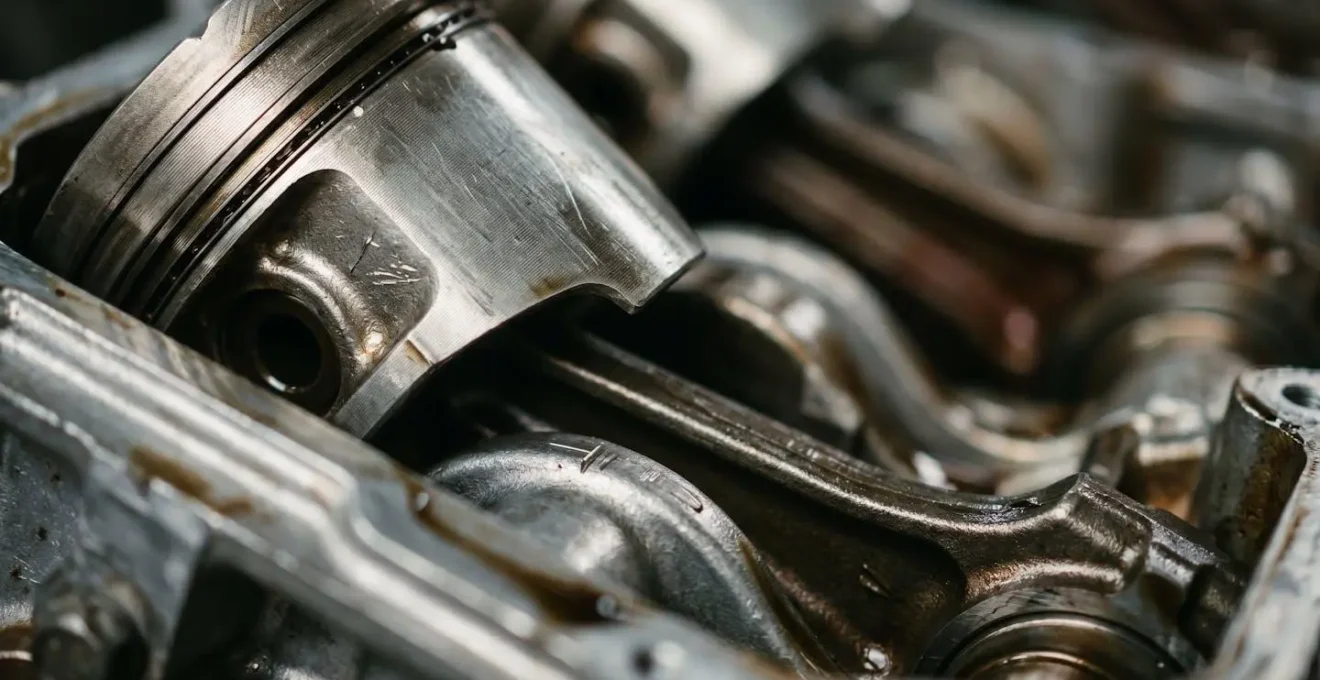
Using the wrong engine oil or extending change intervals isn’t saving you money; it’s a direct path to catastrophic, multi-thousand-pound repairs.
- City driving with short trips destroys oil quality through fuel dilution, often requiring changes more frequent than the manual suggests.
- Premium oils contain specific additives and base stocks designed to protect high-stress components like turbos and Diesel Particulate Filters (DPFs) from premature failure.
Recommendation: Always match the oil’s ACEA “C” specification for any modern diesel with a DPF and consider halving the manufacturer’s recommended service interval if you primarily drive in the city.
You’re standing in the automotive aisle, staring at a wall of engine oil. One bottle says 5W-30, another 0W-20. The premium brand is £15 more than the supermarket’s own. The manual says you can wait 20,000 miles for a change, but your local mechanic shakes his head. You just want to top up your oil without making a catastrophic mistake. This confusion is common, and it’s a symptom of a deeper misunderstanding about the most critical fluid in your vehicle.
Most advice simply tells you to “follow the manufacturer’s recommendation.” While not wrong, this ignores the brutal reality of modern driving conditions and the intricate engineering of today’s engines. A turbocharged, direct-injection engine running in stop-start city traffic places fundamentally different stresses on its oil than one cruising down the motorway. Treating them the same is a recipe for disaster.
But what if the real key wasn’t just about picking the right viscosity number? What if the true cost of getting it wrong wasn’t just poor performance, but an active, silent process of engine destruction? This article is written from the perspective of an engine builder who has seen the expensive consequences of simple oil mistakes. We’re going to bypass the generic advice and look at the mechanical reality. We’ll explore why city driving is a silent killer for oil, how extended intervals gamble with your turbo, and why that cheap oil will cost you thousands when it clogs your diesel particulate filter. This is about understanding the chain of failure, so you can break it before it breaks your bank account.
This guide breaks down the critical, often misunderstood, aspects of engine lubrication. By understanding these key areas, you can make informed decisions that will save you thousands in the long run.
Summary: Understanding the Real Cost of Engine Oil Choices
- Why City Driving Requies More Frequent Oil Changes Than the Manual Says?
- Why waiting 20,000 Miles for an Oil Change Is a Gamble with Your Turbo?
- Why Using Cheap Supermarket Oil Will Block Your Diesel Particulate Filter?
- Castrol vs Generic: Is Premium Oil Really Worth the Extra £15?
- How to Trust Your Electronic Oil Sensor When There’s No Dipstick?
- P0420 Code: Why Replacing the Sensor Might Not Fix Your Catalyst Fault?
- How a Weak Spark Can Cost You £150 a Year in Wasted Petrol?
- Misfire Diagnosis: How to Tell if It’s a Spark Plug or a Coil Pack?
Why city driving requies more frequent oil changes than the manual says?
The manufacturer’s recommended oil change interval is based on “normal” operating conditions. However, what most people consider normal—short trips to the shops, school runs, and stop-start commutes—is classified by engineers as “severe service.” In fact, research shows that as many as 80% of drivers operate under ‘severe’ conditions, even if they don’t rack up high mileage. The real enemy here isn’t miles; it’s engine operating temperature.
An engine needs to reach and maintain its optimal temperature for about 20-30 minutes to burn off contaminants like water vapour and unburnt fuel from the oil. On short trips, the engine rarely gets hot enough for long enough. Instead, this moisture and fuel accumulate in the crankcase. This process, known as fuel dilution, is catastrophic for oil. The petrol or diesel thins the oil, drastically reducing its viscosity and compromising the strength of the lubrication film that protects bearings, camshafts, and cylinder walls from metal-on-metal contact.
Furthermore, moisture doesn’t just evaporate; it combines with combustion by-products to form acidic sludge. This sludge doesn’t lubricate; it clogs oil passages, starves critical components of oil, and accelerates wear. So while your odometer might only show 3,000 miles since the last service, the oil itself could be chemically worn out and dangerously contaminated. For city drivers, changing the oil based on time (e.g., every 6 months) or a much shorter mileage (e.g., 5,000-7,000 miles) is not up-selling; it’s essential preventative maintenance.
Why waiting 20,000 miles for an oil change is a gamble with your turbo?
Modern turbocharged engines produce incredible power from small displacements, but they do so by operating under extreme conditions. A turbocharger’s turbine can spin at over 200,000 RPM and reach temperatures exceeding 900°C. The only thing preventing it from seizing into a molten lump of metal is a constant, high-pressure supply of clean engine oil. This oil serves two purposes: lubrication for the bearings and cooling for the entire assembly.
Over an extended service interval of 15,000 to 20,000 miles, that oil degrades significantly. Its viscosity breaks down, and it becomes saturated with contaminants like soot, carbon, and metallic particles. For a turbo, this is a death sentence. The thinning oil film can no longer support the immense pressures on the shaft bearings, leading to scoring and failure. Even worse, tiny carbon deposits can block the hair-thin oil feed lines. Starved of oil for even a few seconds at 200,000 RPM, the turbo will be destroyed.
This isn’t a cheap fix. According to recent UK data, it costs £1,126 on average for a turbo replacement, with some models costing far more. When you weigh the cost of two or three extra oil changes (perhaps £250 total) against a potential four-figure repair bill, the “economy” of long service intervals quickly evaporates. A catastrophic turbo failure can also send metal fragments into your engine, potentially requiring a full engine replacement. Waiting 20,000 miles isn’t saving money; it’s playing Russian roulette with your engine’s most sensitive and expensive component.
Why using cheap supermarket oil will block your diesel particulate filter?
For owners of any modern diesel car, the Diesel Particulate Filter (DPF) is a critical and incredibly expensive component. Its job is to trap harmful soot particles from the exhaust. Over time, it fills up and the car initiates a “regeneration” cycle, burning off the soot at high temperatures. However, not everything in engine oil can be burned away. This is where the specific chemistry of your oil becomes paramount.
Engine oils contain an additive pack that includes detergents, anti-wear agents, and other compounds. Many of these are metallic-based. When oil is burned in the engine (a small amount always gets past the piston rings), these metallic additives turn into a hard, non-combustible ash. This ash is what permanently clogs a DPF. The oil industry measures this potential for clogging with a value called Sulphated Ash, Phosphorus, and Sulfur (SAPS).
Premium oils designed for modern diesels are formulated as “Low SAPS” or “Mid SAPS.” They use advanced, more expensive additives that produce very little ash. Cheap, non-specific oils are often “High SAPS.” Using a High SAPS oil in a DPF-equipped car is a guaranteed way to clog it. The DPF will fill with ash that cannot be burned off through regeneration, eventually triggering an engine warning light and a costly trip to the garage. A forced regeneration might clear some of it, but permanent clogging is inevitable. DPF replacement is not a minor expense; UK pricing data shows it can range from £1,000 to £3,500. That “saving” of £15 on a bottle of cheap oil quickly becomes a four-figure mistake.
Your Action Plan: Decoding Oil for DPF Protection
- Locate the ACEA specification on your oil bottle’s label, usually on the back.
- Look specifically for C-codes: C1, C2, C3, or C4, as these are all DPF-compatible.
- Understand the difference: C1 and C4 are the lowest SAPS, making them the safest for the newest, most sensitive DPF systems.
- Note that C2 and C3 are mid-SAPS oils, suitable for the majority of cars equipped with a diesel particulate filter.
- If your diesel car has a DPF, you must avoid any oil that does not have an ACEA C-code on the label.
Castrol vs generic: is premium oil really worth the extra £15?
The price difference between a premium brand oil and a generic supermarket bottle isn’t just marketing; it’s a direct reflection of the chemistry inside. All engine oil starts as a base stock, which is then blended with an additive package. The quality and type of both these components determine the oil’s performance and price.
Base stocks are categorized into five groups. Group I and II are conventional mineral oils, refined directly from crude. They are cheap but have poor thermal stability and break down quickly. Group III is a highly refined, hydrocracked mineral oil that can legally be marketed as “synthetic” in many regions. It offers good performance and value, forming the basis of many mainstream synthetic oils. The true top-tier oils use Group IV (Polyalphaolefin or PAO) and Group V (Esters) base stocks. These are genuinely man-made molecules, engineered for exceptional thermal stability, shear resistance, and a naturally high viscosity index. They flow better when cold and maintain their protective film at extreme temperatures far better than lower-group oils.
The additive pack is the other half of the equation. A premium oil from a brand like Castrol, Mobil, or Shell contains a meticulously balanced and heavily researched package of detergents to keep the engine clean, dispersants to suspend contaminants, anti-wear agents like ZDDP, and friction modifiers. Generic oils may meet the minimum API or ACEA specification, but often with a cheaper, less robust additive package that wears out faster. That extra £15 buys you a superior base stock that resists thermal breakdown and an additive pack that keeps protecting your engine for the entire service interval, not just the first few thousand miles.
This table from an analysis by Kinja Automotive breaks down the fundamental differences in base stocks, which directly correlate to an oil’s performance and cost.
| Base Stock Group | Type | Thermal Stability | Typical Use |
|---|---|---|---|
| Group I-II | Conventional Mineral | Basic | Older engines, low-stress applications |
| Group III | Hydrocracked Synthetic | High | Most modern synthetics, good value |
| Group IV | PAO (Polyalphaolefin) | Very High | Premium synthetics, extreme conditions |
| Group V | Ester-based | Exceptional | Racing, high-performance engines |
How to trust your electronic oil sensor when there’s no dipstick?
For over a century, the humble dipstick was the ultimate authority on an engine’s oil level. It was simple, reliable, and gave the driver a chance to physically see and smell the oil, providing clues about its condition. Now, many manufacturers have removed it in favour of an electronic oil sensor and a display on the dashboard. For many owners, this feels like a loss of control and a forced reliance on technology that can be opaque and worrying.
It’s important to understand that these are not simple float switches. Modern electronic oil sensors use sophisticated capacitive or thermal methods to provide a continuous reading of not just the oil level, but often its quality and temperature too. A capacitive sensor can detect changes in the oil’s dielectric properties, which can indicate contamination or degradation. They are highly accurate and have built-in fail-safes. If the sensor fails, the system is designed to alert the driver immediately. In this sense, they are far more advanced than a simple dipstick check.
However, the technology has one major blind spot: it cannot easily detect serious contaminants like coolant (from a head gasket leak) or significant fuel dilution. A physical inspection of the oil on a dipstick would immediately reveal the milky-white emulsion of oil and coolant, or the strong smell of petrol. The electronic sensor might only register a change in quality, which could be misinterpreted. Therefore, while you can and should trust the sensor for its primary purpose—monitoring the oil level—it does not eliminate the need for regular servicing. During a proper service, a technician will drain the oil, allowing for a visual inspection that provides the final, definitive check on your engine’s internal health.
P0420 code: why replacing the sensor might not fix your catalyst fault?
The “P0420 – Catalyst System Efficiency Below Threshold” code is one of the most common and frustrating check engine lights a car owner can face. The immediate assumption, often encouraged by a quick internet search, is that the expensive catalytic converter has failed, or that an oxygen sensor is faulty. While replacing the downstream O2 sensor is a common first step, it’s often a waste of money because it treats a symptom, not the root cause.
The P0420 code is set when the post-catalyst oxygen sensor’s readings start to mimic the pre-catalyst sensor’s readings. In a healthy system, the pre-cat sensor fluctuates rapidly as the ECU adjusts the fuel mixture, while the post-cat sensor should be slow and steady, indicating the catalyst has done its job of “cleaning” the exhaust. When the post-cat sensor starts fluctuating, it means the catalyst is no longer efficient. The sensor is not faulty; it is accurately reporting a problem. Replacing it is like shooting the messenger.
A good technician will investigate what killed the catalyst in the first place. The real culprit is often an upstream problem. An exhaust leak, for example, can introduce oxygen that fools the sensors. More commonly, it’s an engine running condition. Persistent misfires, a rich fuel mixture, or significant oil consumption (blue smoke) will send unburnt fuel and contaminants into the exhaust, which then superheat and destroy the delicate honeycomb structure of the catalyst. Until you fix the misfire, the fuel issue, or the oil burning, any new catalyst you install is destined to suffer the same fate. The P0420 code is a final-stage warning; the real problem started long before.
Key Takeaways
- Oil change intervals should be based on driving style, not just mileage; city driving demands more frequent changes.
- Using oil that doesn’t meet the specific ACEA “C” specification for your modern diesel will inevitably clog the DPF, leading to a multi-thousand-pound repair.
- The price of premium oil reflects superior base stocks and additive packages that provide essential protection for high-stress components like turbochargers.
How a weak spark can cost you £150 a year in wasted petrol?
A single spark plug costs less than a fancy coffee, yet a worn or failing one can initiate a surprisingly expensive chain of failures. The most immediate impact is on fuel economy. A weak spark leads to incomplete combustion, meaning not all the fuel injected into the cylinder gets burned efficiently. Some of it is simply pushed out of the exhaust valve as wasted energy. A 5-10% reduction in fuel efficiency is common. For an average UK driver, that can easily equate to £100-£200 a year in wasted petrol.
But the true cost is far greater. That unburnt fuel doesn’t just vanish. It travels down the hot exhaust pipe until it reaches the catalytic converter. Here, it finally combusts, causing the catalyst’s internal temperature to skyrocket far beyond its design limits. This process, known as catalyst poisoning, will rapidly degrade and destroy the converter, leading to the dreaded P0420 fault code and a £1,000+ repair bill.
The chain of failure doesn’t stop there. The incomplete combustion also increases “blow-by”—gases and unburnt fuel forcing their way past the piston rings and into the engine’s crankcase. This raw fuel contaminates the engine oil, a process we know as fuel dilution. The contaminated oil loses its ability to lubricate properly, accelerating wear on every moving part of the engine, from the main bearings to the camshafts. What began as a simple, cheap-to-fix spark plug issue has now transformed into a multi-faceted problem that threatens the entire engine. This is the essence of preventative maintenance: spending £10 on a spark plug today saves you thousands on an engine or catalyst tomorrow.
Misfire diagnosis: how to tell if it’s a spark plug or a coil pack?
An engine misfire, felt as a hesitation, stuttering, or flashing check engine light, is a clear signal that something is wrong in the ignition system. In modern cars with a “coil-on-plug” design, the two most likely culprits are the spark plug itself or the coil pack that sits on top of it and generates the high-voltage spark. Since a coil pack can cost ten times more than a spark plug, it pays to diagnose which one has failed rather than guessing.
Fortunately, there’s a simple diagnostic trick that even a home mechanic can perform. First, you need to identify which cylinder is misfiring. A basic OBD2 code reader (a worthwhile £20 investment) will give you a specific code, such as “P0302,” which indicates a misfire on Cylinder 2. Once you know the problematic cylinder, the process is straightforward. Let’s assume Cylinder 2 is the culprit.
The test involves swapping a known good component with the suspect one. Label the coil pack from Cylinder 2. Then, swap it with the coil pack from an adjacent, healthy cylinder, say Cylinder 1. Clear the fault codes and run the engine until it misfires again. Now, re-read the codes. If the code has moved to “P0301” (Misfire on Cylinder 1), you have proven the fault lies with the coil pack you moved. If the code remains “P0302,” the fault is not the coil pack. The next logical step is to do the same with the spark plugs. This simple swapping method isolates the faulty component without wasting money on unnecessary parts.
Understanding that your car is an interconnected system is the most important lesson in automotive ownership. An issue in the ignition system affects the exhaust, which in turn affects the engine’s lubrication. Viewing maintenance through this lens transforms it from a series of disconnected costs into a single, cohesive strategy for ensuring the longevity and reliability of your vehicle. To put this knowledge into practice, the next logical step is to develop a maintenance schedule that is tailored not to the generic manual, but to your specific driving habits.