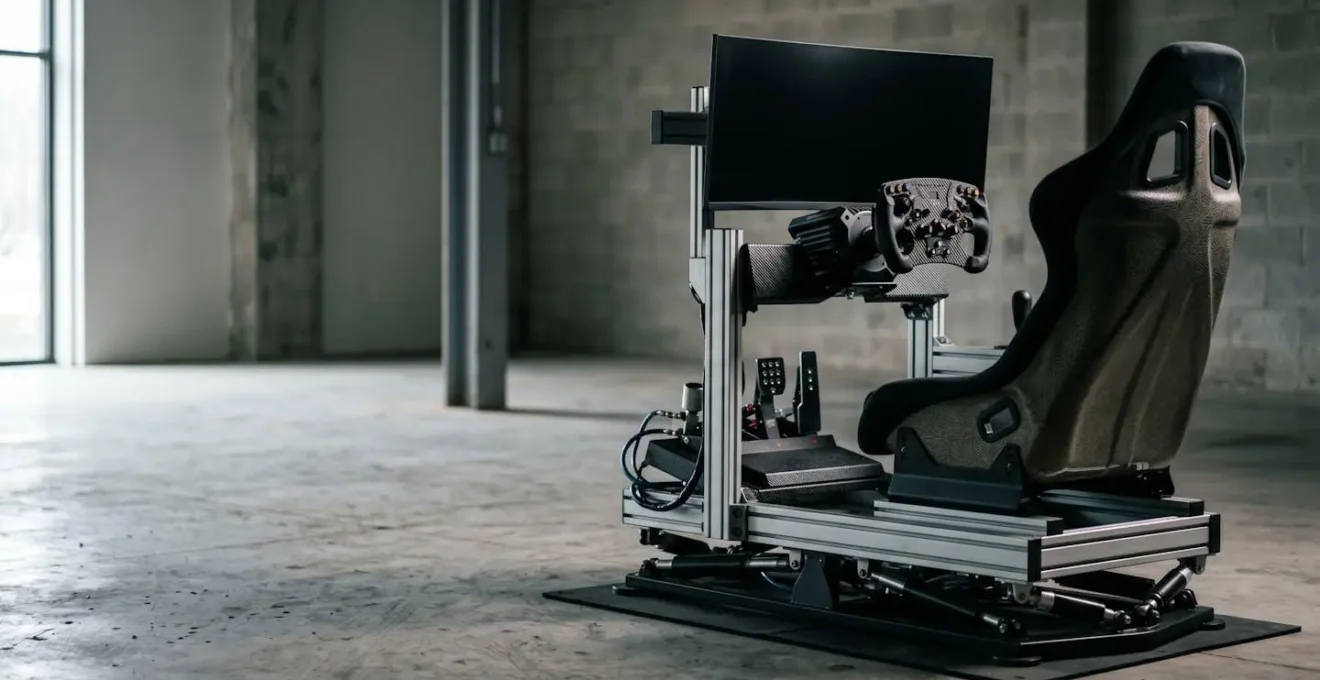
The path from gamer to pro racer is no longer a myth; it’s a professionalizing talent pipeline with new, viable entry points.
- Sim racing’s hyper-realism is creating a verifiable “performance currency” that teams and sponsors are beginning to recognize.
- The fan experience, reshaped by Netflix and VR, is now a core part of the motorsport economy, indirectly funding new talent opportunities.
Recommendation: To make the leap, focus on building a digital track record in competitive leagues and leveraging social sim hubs as your real-world showcase.
For any dedicated gamer who has nailed a perfect lap around Monza or Spa in Gran Turismo, the question is inevitable: “Could I do this for real?” The fantasy of trading a gaming chair for a carbon-fiber cockpit fuels a multi-billion dollar industry and a generation of hopefuls. For years, this dream seemed like a one-in-a-million shot, a narrative crystallized by the incredible story of Jann Mardenborough, who went from his bedroom to the podium at Le Mans.
The common advice that followed was predictable: get a better wheel, practice relentlessly, and hope for a miracle. But this view is becoming outdated. As a talent scout, I see a fundamental shift in the landscape. The question is no longer *if* a gamer can become a racer, but rather understanding *how* the new, professionalized ecosystem makes it possible. The journey is no longer a lottery ticket; it’s a new career path with its own rules, gatekeepers, and proving grounds.
This is not just about the technology in the simulator; it’s about the entire culture surrounding motorsport. The explosion of social racing venues, the immersive power of virtual reality, and the profound economic impact of a younger, more engaged fanbase are not separate trends. They are interconnected pieces of a new talent pipeline, turning virtual performance into a legitimate currency for real-world opportunity. This analysis maps out that new reality, exploring the critical components that can turn digital speed into a tangible career.
This article explores the interconnected elements that are reshaping the path to professional motorsport. By examining each piece of the puzzle, from social hubs to the impact of media, we can build a complete picture of the modern talent pipeline.
Summary: The New Rules of the Gamer-to-Racer Talent Pipeline
- Why Social Sim Racing Venues Are Exploding in London?
- How Virtual Reality Is Changing How We Watch Races?
- Why the Fan Zone is Now a Festival rivaling the Race Itself?
- The ‘Jann Mardenborough’ Effect: Is Gamer-to-Racer Still Possible?
- The ‘Drive to Survive’ Effect: How Netflix Changed the Fanbase?
- Does Money Still Buy a Seat in Top-Tier Motorsport?
- More Than a Race: Why the Grand Prix is Now a Music Festival?
- Where is the Best Place to Hear Drivers Speak at the Track?
Why Social Sim Racing Venues Are Exploding in London?
The traditional entry point into motorsport has always been the karting track—an expensive, geographically-limited, and physically demanding proving ground. Today, a new first step is emerging in urban centers: the social sim racing venue. These are not the dingy arcades of the past but high-tech, experience-focused hubs that act as a physical bridge for the digital racing community. London, in particular, has become a hotbed for this trend, blending competitive esports with social entertainment.
This boom is powered by a market that is rapidly professionalizing. The global racing simulator market, valued at $1.30 billion in 2026, is projected to reach $2.46 billion by 2034. This growth isn’t just about home setups; it’s about creating destinations. A prime example is the partnership between Drive Lounge and Guild Esports to launch a 20-simulator venue in Shoreditch. This facility moves beyond a simple pay-to-play model, offering organized league nights, coaching from professional sim drivers, and F1 watch parties. It’s a clubhouse for the digital racer.
For an aspiring driver, these venues are invaluable. They offer access to high-end equipment without the prohibitive upfront cost, but their true value is in the community and competition. They are the new grassroots scene where talent can be spotted. Winning an online lobby from your bedroom is one thing; consistently setting the fastest laps in a high-pressure, in-person league environment is a different level of validation. These venues are where online reputations are converted into real-world recognition, creating the first data point for any talent scout.
They represent a fundamental democratization of the first step on the motorsport ladder, making it more accessible, measurable, and visible than ever before.
How Virtual Reality Is Changing How We Watch Races?
The transformation of motorsport is not limited to participation; it’s also revolutionizing how fans consume the sport, which in turn fuels the entire ecosystem. Virtual Reality (VR) is moving from a niche gaming technology to a core part of the live broadcast experience, fundamentally altering the relationship between the fan and the action. Instead of being a passive observer, the viewer can now be an immersive participant, a shift that has profound implications for fan engagement and driver visibility.
NASCAR’s recent initiatives provide a clear blueprint for this future. As their executive Brian Herbst notes, the goal is to create an experience that was previously impossible. In his own words:
This is a game-changer. We want fans to feel the race in a way that wasn’t possible before. Virtual reality, immersive viewing – these are the technologies that will define the next era of sports entertainment.
– Brian Herbst, NASCAR Executive Vice President and Chief Media & Revenue Officer
This vision became a reality during the 2025 Daytona 500. Through a partnership with Meta, NASCAR implemented live VR broadcasting, allowing viewers with Quest headsets to experience the race from inside the cars. Using the Xtadium application, fans could choose their own viewing angles and perspectives, effectively becoming their own race director. This isn’t just a gimmick; it’s a tool that provides unprecedented insight into a driver’s technique, decision-making, and the sheer chaos of a packed racetrack. It bridges the empathy gap between the sofa and the cockpit, making the driver’s skill more tangible and appreciated.
For the talent pipeline, this is significant. As more fans understand the millimetric precision required in motorsport through these immersive experiences, the respect for high-level sim racers grows. The skills demonstrated in a hyper-realistic simulator are seen as more directly transferable when the audience can virtually experience the real thing. This shift in perception helps legitimize sim racing as a genuine training ground, not just a game.
It creates a more educated, engaged, and invested audience, which is the perfect environment for new talent to emerge and be recognized.
Why the Fan Zone is Now a Festival rivaling the Race Itself?
The modern Grand Prix weekend is no longer just about the two hours of racing on Sunday. It has transformed into a multi-day cultural event where the on-track action is just one part of a much larger entertainment package. The fan zone, once a simple collection of merchandise stalls, has evolved into a full-blown festival environment, complete with concerts, celebrity appearances, interactive exhibits, and, crucially, high-stakes sim racing competitions. This “festivalization” is a deliberate strategy to attract a new, broader audience and has become a key component of the motorsport economy.
This strategy is a direct response to a changing fanbase. The audience is becoming younger, more diverse, and less likely to be composed of hardcore engineering enthusiasts. Data shows that women now represent 42% of F1’s audience, a significant increase that reflects the sport’s broadening appeal. These new fans are seeking an experience, not just a sporting event. They want entertainment, access, and a sense of community. The fan zone delivers on all these fronts, creating a vibrant, high-energy atmosphere that keeps them engaged throughout the weekend.
From a talent scout’s perspective, the fan zone is a fascinating microcosm of the new ecosystem. It’s where the commercial side of the sport directly intersects with the grassroots talent pool. The e-sports stages set up in these zones are highly visible platforms. A sim racer who performs well here isn’t just winning a prize; they are demonstrating their skill in front of thousands of fans, media, and potential sponsors. They are proving they can handle pressure and be an engaging personality—qualities that are just as valuable as raw pace in the modern sponsorship-driven world of motorsport. The fan zone has become a live-action audition stage, blending entertainment with high-stakes competition.
It’s a powerful engine for fan engagement, and it creates a commercial and cultural environment where virtual talent can get its first taste of the big stage.
The ‘Jann Mardenborough’ Effect: Is Gamer-to-Racer Still Possible?
No discussion about the gamer-to-racer pipeline is complete without invoking the name Jann Mardenborough. His story is the foundational myth of the movement. In 2011, the British teenager beat over 90,000 competitors in the GT Academy, a revolutionary competition that aimed to find a true racing talent from the world of Gran Turismo. Within two years, he went from his parents’ house in Cardiff to a podium finish at the legendary 24 Hours of Le Mans. His journey proved that the skills honed in a simulator were not just a fantasy; they could be translated into real-world pace.
However, with the GT Academy now defunct, the crucial question is whether this was a one-time marketing coup or a sustainable path. The answer is complex. The “Mardenborough Effect” was not just about his individual success; it was about the seismic shift in perception it caused. As Mardenborough himself stated, sim racing has transformed from a private hobby into a respected discipline within motorsport. This legitimacy is the key. While the specific GT Academy program is gone, it has been replaced by a more fragmented but arguably more robust ecosystem of online leagues, esports championships, and scouting programs. The path is less direct, but the opportunities are more numerous.
Today, making the leap requires more than just being fast. It requires treating sim racing as a professional career from day one. This means mastering a variety of cars and tracks, understanding telemetry, working with engineers (even in a virtual team), and building a personal brand. The equipment itself reflects this professionalization, with direct-drive wheels and load-cell pedals blurring the line between simulation and reality. The path still exists, but it demands a level of dedication and strategic thinking that goes far beyond casual gaming.
Your Action Plan: Getting on the Talent Scout’s Radar
- Dominate the Proving Grounds: Focus on top-tier, broadcasted sim racing leagues (e.g., iRacing special events, SRO Esports). Consistency here is your digital CV.
- Build Your Data Profile: Learn to analyze your own telemetry. Show potential teams you speak their language and are focused on technical improvement, not just raw speed.
- Get Physical: Supplement your sim time with a physical fitness regimen, especially focused on neck strength and cardio. Document and share this to show your commitment.
- Master the Media Game: Create clean, professional social media profiles. Practice speaking on a microphone after races. Your value as a driver includes your ability to represent sponsors.
- Network at the Node: Attend events at social sim racing venues. Compete in their leagues. Use these hubs as a place to meet team managers, other drivers, and industry insiders in person.
He proved it was possible, and in doing so, he laid the groundwork for the professionalized pipeline that exists today. The door he opened remains ajar for those with the talent, discipline, and strategic mindset to walk through it.
The ‘Drive to Survive’ Effect: How Netflix Changed the Fanbase?
While sim racing technology provides the tools for the gamer-to-racer transition, the cultural context that makes this transition viable has been fundamentally reshaped by an unlikely force: a Netflix docuseries. *Formula 1: Drive to Survive* did more than just boost viewership numbers; it completely changed the demographic and apathetic fabric of the F1 fanbase, creating a ripple effect that benefits the entire motorsport ecosystem, including the sim racing talent pipeline.
The show’s masterstroke was to focus on the human drama—the rivalries, the pressure, the personalities—rather than the technical complexities of the sport. This narrative approach made Formula 1 accessible and compelling to a massive new audience that had previously been indifferent to motorsport. The numbers are staggering. The average age of an F1 fan dropped from 36 to 32 in just four years, and the global fanbase swelled to 827 million worldwide, with 43% of fans now under the age of 35. This is the “Drive to Survive” effect: a younger, more digitally native, and more emotionally invested audience.
Why does this matter for an aspiring sim racer? Because this new audience is the primary market for sim racing games, hardware, and social venues. They are the ones who, after watching a dramatic race on Sunday, want to try it for themselves on Monday. This creates a virtuous cycle:
- More fans mean more sales for games like F1 and Gran Turismo, funding more realistic development.
- More players create a larger, more competitive talent pool at the top of online leaderboards.
- A larger, engaged audience creates more commercial opportunities for sponsors, who are now more willing to invest in esports teams and even fund a talented sim racer’s transition to a real car.
The show effectively created a new generation of fans who see drivers as characters in a story and who are comfortable engaging with the sport through digital platforms. This makes the leap from a virtual star to a real-world personality much smaller. In a sense, Netflix has pre-qualified the audience to accept and celebrate the gamer-to-racer narrative.
It has created the fertile ground—both culturally and economically—upon which the new talent pipeline can grow.
Does Money Still Buy a Seat in Top-Tier Motorsport?
The age-old axiom of motorsport is “speed costs money; how fast do you want to go?” For decades, the path to the top was paved with family wealth or massive corporate sponsorships, creating a high barrier to entry that no amount of raw talent alone could overcome. The rise of sim racing introduces a tantalizing question: can a “performance currency” earned through virtual skill finally bypass the need for a nine-figure bank account? The answer is a qualified “no,” but the financial equation is changing in fascinating ways.
On one hand, sim racing has created its own thriving economy. The hardware market is booming; for instance, a leading brand like Fanatec reportedly generated approximately $110 million in sales in a single year. Pro sim racers can now earn six-figure salaries through prize money, streaming, and contracts with esports teams. This creates a new, intermediate career path. A driver can now make a living from racing without ever needing to pay for tires or fuel. This democratizes the ability to compete professionally, at least in the virtual world.
However, the leap from a salaried sim racer to a seat in a real-world Formula or GT car remains a chasm that often must be bridged with cash. Even Jann Mardenborough, the poster child for the meritocratic dream, acknowledges this reality. He hopes his story will inspire new investment, stating:
I hope after the movie comes out, it’ll inspire big companies or private money to launch other similar projects [like ‘GT Academy’] because you need capital to fund a racing career, to even get your foot in the door.
– Jann Mardenborough, NBC News Interview on GT Academy Legacy
The new model, therefore, is not about talent replacing money. It’s about using verifiable virtual talent to attract money. A sim racer with a massive online following, a proven record in top-tier esports, and a compelling personal brand is a much more attractive investment for a sponsor than an unknown quantity from the world of karting. The money is still required, but sim racing provides a data-driven, high-visibility platform to justify that investment.
Talent gets you to the table, but in most cases, you still need to bring a check to play the game at the highest level.
Key Takeaways
- The gamer-to-racer path is evolving from a fluke to a structured, albeit competitive, talent pipeline.
- Sim racing is now a source of “performance currency,” a verifiable track record that teams and sponsors are starting to recognize.
- The fan experience itself—from social venues to VR and festivals—is a crucial part of the new motorsport economy that creates these opportunities.
More Than a Race: Why the Grand Prix is Now a Music Festival?
The ultimate expression of motorsport’s new identity can be seen in the evolution of the Grand Prix weekend itself. The event has transcended its sporting origins to become a large-scale entertainment spectacle, more akin to a music festival like Coachella or Glastonbury than a traditional race meeting. This strategic pivot is designed to capture the “experience economy,” drawing in crowds who are seeking a full weekend of entertainment, with the race as the headline act.
The attendance figures confirm the success of this strategy. The 2025 British Grand Prix at Silverstone, for example, featured headline concerts from international music stars and drew a record-breaking 500,000 fans over four days. This is not an isolated phenomenon. Across the calendar, race promoters are investing heavily in off-track entertainment, and the results are clear: the average weekend attendance for a Grand Prix has soared in recent years. This transformation is about maximizing value—not just for the fans, but for the sponsors and the sport itself.
This “festivalization” creates a high-energy, commercially potent environment. For sponsors, it offers a unique opportunity to connect with a huge, engaged, and often affluent audience in a celebratory mood. This influx of sponsorship revenue is the lifeblood of the sport, and it indirectly funds the entire ecosystem, from the development of the cars to the prize money in junior formulas. The more successful a Grand Prix is as an overall event, the healthier the sport becomes, and the more opportunities there are for new talent to find funding.
In this context, the sim racing competitions and fan stages are not just side attractions; they are integral parts of the festival lineup. They provide interactive, accessible content that fills the gaps between on-track sessions, keeping the audience engaged and entertained. For an aspiring driver, this is the grand stage—a place where the worlds of virtual and real racing, sport, and entertainment all converge. It’s the physical manifestation of the new, multifaceted world of professional motorsport.
This larger entertainment framework is what makes the entire modern motorsport economy, and the new talent pipeline within it, financially viable.
Where is the Best Place to Hear Drivers Speak at the Track?
In the old model of motorsport, access to drivers was a rare commodity, reserved for accredited media and VIPs. For the average fan, the drivers were distant figures, visible only through a chain-link fence or on a television screen. The transformation of the fan experience has shattered this model. As part of the sport’s new focus on accessibility and engagement, there are now numerous, structured opportunities for fans to hear directly from their heroes.
The single best place to hear drivers speak in a relaxed and interactive format is the Fan Forum stage, now a centerpiece of most major race weekend fan zones. Here, drivers participate in Q&A sessions, often hosted by popular presenters, where they answer questions directly from the audience. This is a far cry from the tense, guarded environment of a post-qualifying press conference. On the fan stage, drivers are more likely to share personal anecdotes, talk about their lives outside of racing, and showcase the personality that series like *Drive to Survive* have made so valuable.
Beyond the main stage, other key access points include:
- The Pit Lane Walk: Many ticket packages now include a designated time for fans to walk the pit lane, offering a chance to see the cars up close and potentially interact with drivers and team personnel as they move between the garage and their hospitality suites.
- Autograph Sessions: While often crowded, scheduled autograph sessions remain a staple of the fan experience, providing a guaranteed, if brief, face-to-face moment.
- Team-Specific Events: Major teams often host their own events for fan club members or sponsors within the circuit, which can include exclusive driver appearances.
This increased access is a deliberate strategy. It forges a stronger emotional connection between the fans and the drivers, which in turn drives merchandise sales, television ratings, and overall engagement. For the aspiring sim racer, these venues offer invaluable lessons in media performance. Watching how a professional driver handles a crowd, answers a tough question, or tells an engaging story is a masterclass in the off-track skills that are now essential for a successful career.
The grid is no longer a closed shop. Your journey from the sofa to the cockpit starts by treating your sim racing as a career. Build your digital CV, get seen in the new social arenas, and prove your pace. The next talent scout is watching.